Is Victoria Falls Bigger Than Niagara? A Direct Comparison
When travellers gather on observation decks to debate the scale of the world’s great cascades, the argument almost always settles into a familiar duel. People pit the thunderous borders of Africa against the commercialized power of North America. Having lived by the banks of the Zambezi for years, I often hear visitors arrive with preconceived notions forged by postcards and cinema. They expect a taller drop, a wider basin, or a louder roar than anything they have previously witnessed. Demystifying the scale requires looking past simple tourist hyperbole and examining the raw geographic data that defines these two titans.
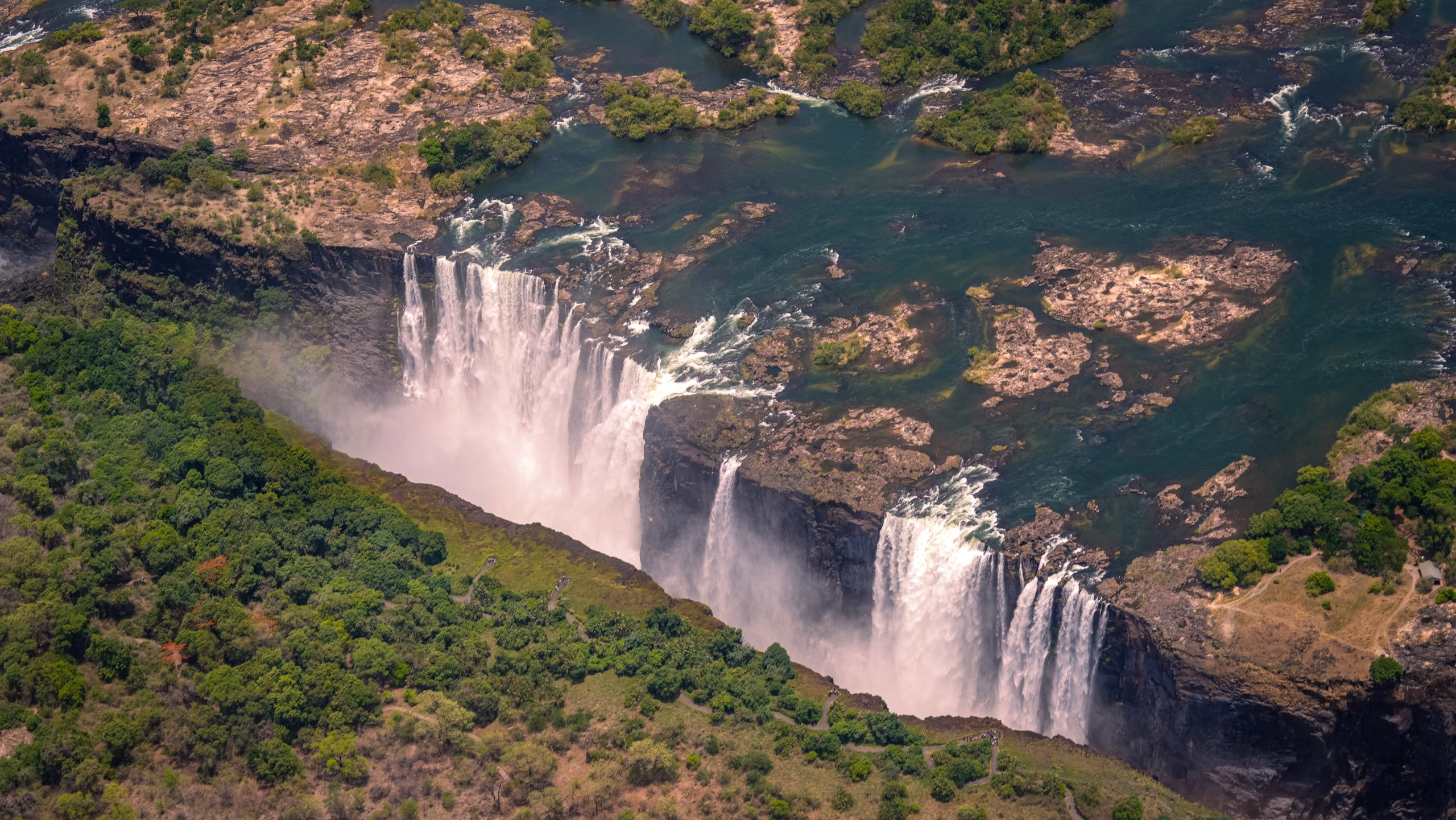
Defining Scale: Height, Width, and Volume Metrics
Weighing one natural wonder against another demands strict adherence to physical measurements rather than emotional impressions. Defining what makes a waterfall bigger involves three distinct metrics: height, width, and total volume of water passing over the precipice per second. Niagara commands attention through sheer volume diversion, but the African giant claims dominance across linear span and vertical drop combined. Travellers frequently confuse vertical height with overall mass, yet the true majesty lies in the uninterrupted curtain of falling water.
Head-to-Head Dimensions: Victoria Falls vs Niagara Falls
The numerical reality becomes stark when laying the statistics side by side. The Victoria Falls of Zimbabwe span an astonishing 1,708 metres across, plunging into a maximum depth of 108 metres into a series of zigzagging gorges. By contrast, Niagara spans roughly 1,204 metres across its combined Horseshoe, American, and Bridal Veil falls, with a much more modest vertical drop of 51 metres. These official dimensions catalogued by the UNESCO World Heritage Centre confirm that the sheet of falling water along the Zambezi doubles the height of its North American counterpart whilst offering a significantly broader uninterrupted horizon of spray.
| Metric | Victoria Falls (Zimbabwe / Zambia) | Niagara Falls (USA / Canada) |
|---|---|---|
| Total Width | 1,708 metres (5,604 feet) | 1,204 metres (3,950 feet) |
| Maximum Height | 108 metres (354 feet) | 51 metres (167 feet) |
| Peak Flow Rate | 12,600 m³/s (445,000 cu ft/s) | 2,400 m³/s (85,000 cu ft/s) |
| Geological Formation | Basalt fracture in plateau | Escarpment erosion |
| Status | Seven Natural Wonders of the World | Major Regional Waterway |
The Curtain of Water: World’s Largest Sheet
Victoria Falls holds the recognized global classification as the largest single sheet of falling water on earth. This distinction stems from multiplying its 1,708-metre width by its 108-metre height. No other waterfall creates a wall of descending water that is both so wide and so deep without interruption. While South America’s Iguaçu Falls spans a wider overall distance across its archipelago of islands, its water breaks into separate distinct drops. Victoria Falls cascades in one continuous, earth-shaking wall across the gorge.
Volume and Flow Dynamics: Natural Flood Cycles vs Hydroelectric Diversion
Understanding volume requires examining how humans interact with these rivers. Niagara maintains a relatively steady average flow around 2,400 cubic metres per second throughout the year. Engineers actively control this rate using weir gates upstream, diverting huge quantities of water into hydro turbines to supply power to Ontario and New York. The Zambezi River runs wild without major commercial hydro gates at the precipice. High flood peak reaches up to 10,000 cubic metres per second in April [1.3.1], swollen by rains far upstream in the highlands of Angola. During these high water months, the sheer force converts millions of gallons into dense mist that towers hundreds of metres above the gorge.
“Standing near Danger Point during peak flow, the roar vibrating through your chest makes you understand why the local people named it Mosi-oa-Tunya.” – Eleanor Sterling
Geological Architecture: Basalt Chasm vs Escarpment Erosion
The structural foundations of these two locations tell entirely distinct geological stories. At Victoria Falls Zim, the Zambezi River flows over a flat plateau of hard basalt rock cut by soft sandstone joints. Over hundreds of thousands of years, the river eroded eight successive transverse gorges, dropping down into narrow vertical slots barely a hundred metres wide. Niagara cuts through softer limestone and shale along the Niagara Escarpment, gradually receding backwards upstream toward Lake Erie. The basalt walls of the Batoka Gorge lock the water into a tight rift, magnifying the thunder and pressure of the drop.
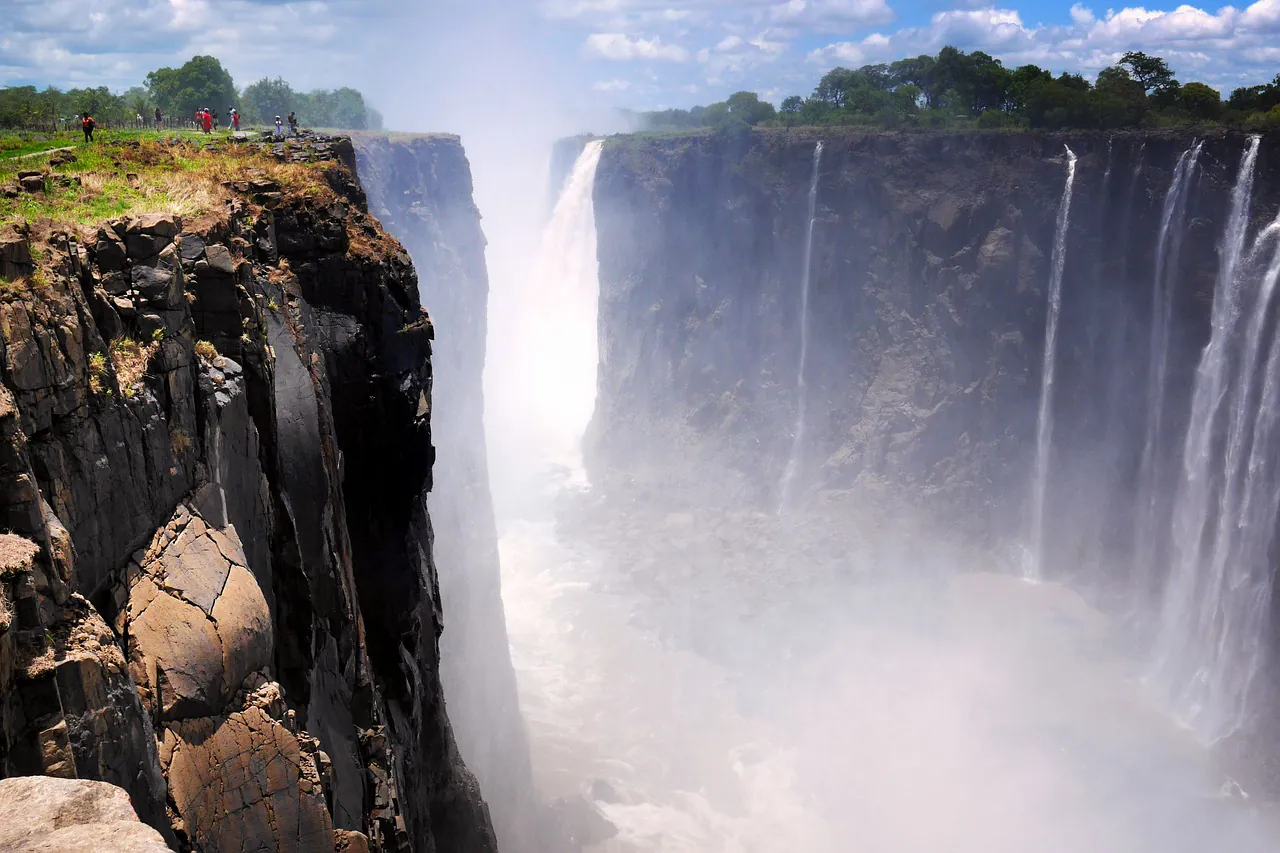
Sensory and Atmospheric Comparison
Atmospheric conditions at the two sites produce drastically different sensory worlds. teh golden hour light strikes the rising mist around five o’clock in the afternoon, painting vivid double rainbows across the gorge that photographers dream about. Because the Zambezi plunges into a narrow slit, the rising vapor gets trapped and pushed skyward like smoke from a forest fire. At Niagara, the wide, open basin allows mist to dissipate across the river banks, creating heavy fog rather than towering columns of spray.
Surrounding Landscapes: Wilderness vs Urban Commercialization
The Wild African Sanctuary
The land surrounding Victoria Falls remains protected within national parks on both the Zimbabwean and Zambian sides. Walking the rainforest paths managed by the Zimbabwe Tourism Authority feels like stepping back into an untouched wilderness. Warthogs graze along the trail margins, trumpeting elephants move down to the upper river islands, and bushbucks browse in the lush undergrowth nurtured by continuous spray.
The North American Resort Hub
Niagara Falls sits within an urban corridor surrounded by high-rise hotels, casinos, and neon-lit entertainment avenues. High-capacity viewing plazas line the concrete borders, lit by artificial floodlights at night. While accessible for quick day trips, the atmosphere trades natural wilderness for dense commercial infrastructure and heavy tourist crowds.
Cultural Legacy and Naming History
Long before European explorers arrived on the African continent, local Kololo and Tonga peoples named the cascade *Mosi-oa-Tunya*, which translates directly to “The Smoke That Thunders.” In November 1855, Scottish missionary David Livingstone reached the lip of the gorge and named the falls after Queen Victoria. The double naming reflects a rich historical narrative that honors both ancient indigenous heritage and nineteenth-century geography. Readers interested in regional background can explore our detailed Nature & Geography Guide for deeper insights into the river’s geological origins.
Seasonal Fluctuations: The Changing Face of the Zambezi
Unlike Niagara’s engineered, steady water output, Victoria Falls undergoes profound transformations across the seasons. From March through May, swollen river currents transform the entire 1.7-kilometre precipice into a wall of white water. By October and November, dry weather reduces the flow along the eastern Zambian flank, revealing the dark basalt rock beneath. Understanding these water shifts is essential for planning visits, as detailed in our guide on Understanding the Victoria Falls Drought.
Visitor Experience: Walking the Rainforest Paths
Stepping onto the Zimbabwean footpath network provides a visceral encounter with nature. Sixteen distinct viewpoints trace the lip of the cliff directly opposite the falling curtain, sending cool spray washing over your face as you move through the teak forest. Travelers planning their itineraries can arrange specialized victoria falls africa tours or purchase advance entries via our tickets page to experience sunset cruises on the upper river before heading into the national park. Concerns about regional safety are fully addressed in our guide on whether Zimbabwe is safe for tourists.
Scale is measured not merely in physical width or volume, but in how completely the raw wilderness humbles you when standing at the edge.
Determining which waterfall claims victory depends on what you value most. Niagara offers engineered convenience and immense regulated volume. The Victoria Falls of Zimbabwe delivers unmatched scale, towering twice as high and stretching nearly twice as wide across a wild, unpaved African landscape that visitors from all over the world travel for.